

01das.os.orchestration
Control
Six functions from peak shaving to dynamic grid purchasing. Detects an imminent load peak and counteracts it with storage, charging infrastructure or consumers.

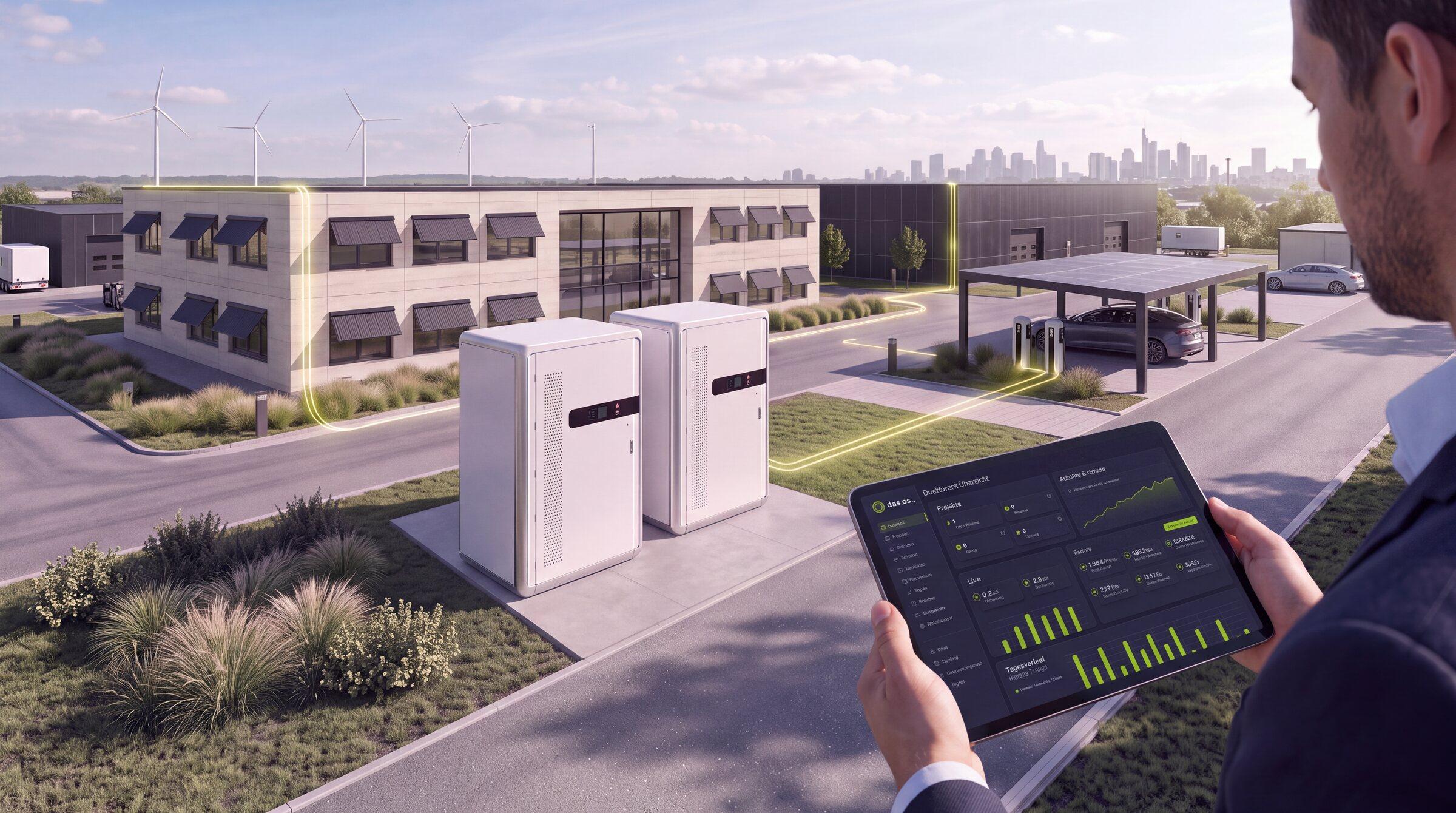
das.os connects generation, storage and consumers into one system. It measures every energy flow in the building, controls it with six functions and optimises operation.
das.os has three tasks: measure, control and optimise. Billing does not happen in das.os, but in das.care.
Six functions from peak shaving to dynamic grid purchasing. Detects an imminent load peak and counteracts it with storage, charging infrastructure or consumers.
Connects meters and systems and shows what is happening: current load, grid purchase, storage power, peak values and status messages such as "Peak shaving active".
Evaluates afterwards: peaks avoided, peak load reduced in kW and the resulting savings in euros.
Peak shaving shows best how the tasks interlock. The same load peak passes through all three: measure, control, optimise.
Measure
das.os.connect and das.os.monitoring show current load, grid purchase, storage power and peak values in real time – including the status message "Peak shaving active".
Control
This is where peak shaving actually happens: das.os.orchestration detects an imminent load peak and counteracts it with storage, charging infrastructure or consumers.
Optimise
How many peaks were avoided? How many kW of peak load were reduced? How many euros were saved? das.os.analytics shows the savings – billing happens in das.care.
Control: das.os.orchestration with six functions. Measure: das.os.connect and das.os.monitoring. Optimise: das.os.analytics.
Control. Orchestration detects situations in the energy system and intervenes before they cost money.
Peak shaving, self-consumption optimisation, storage control, PV surplus, charging optimisation and dynamic grid supply are all functions of Orchestration.
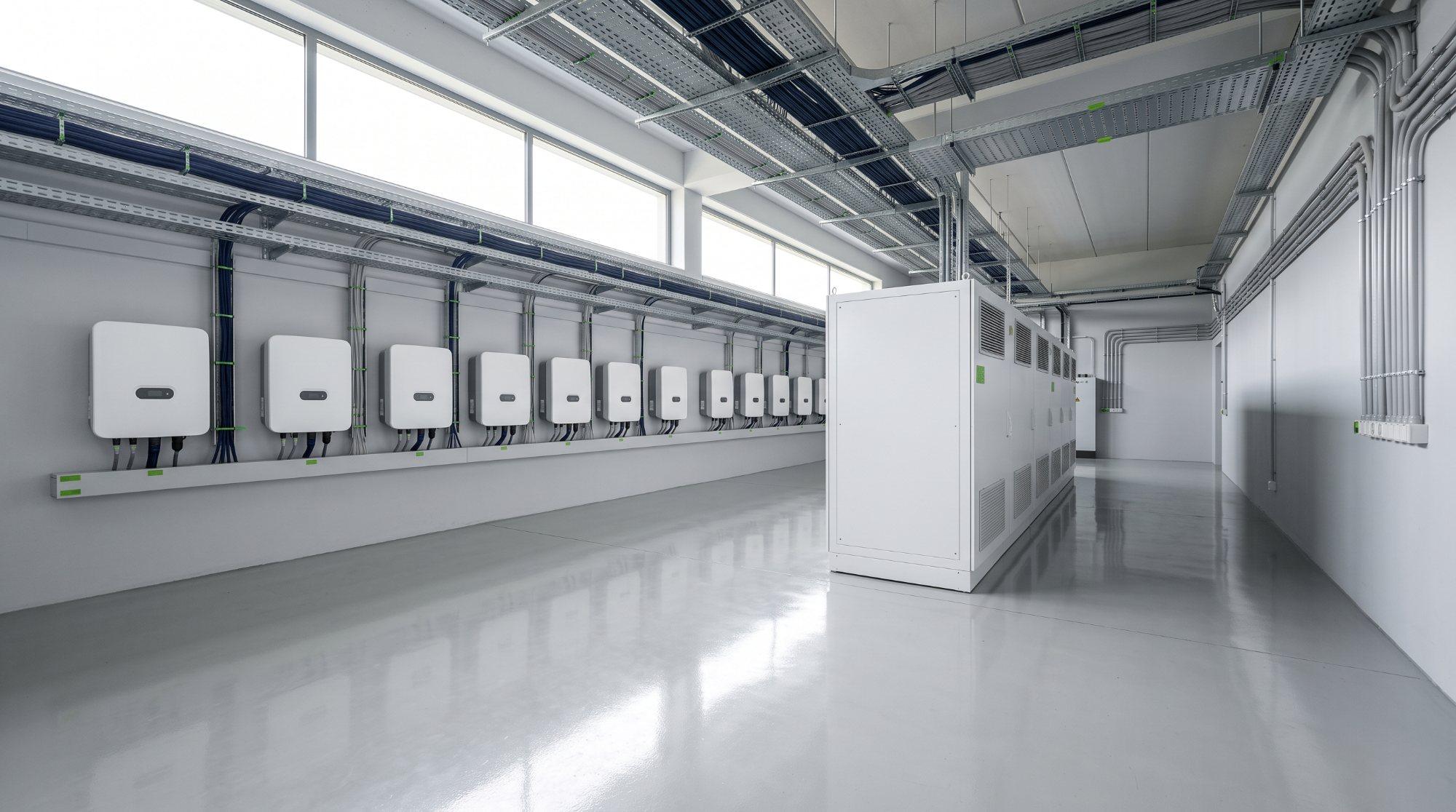 das.os.orchestration
acts
and optimises
A looming peak load is detected and intercepted with storage, charging infrastructure or consumers.
Self-generated energy is used where it has the highest value in the building.
Charging and discharging of the storage follow the situation in the grid and in the building.
Surplus solar power is used deliberately instead of flowing into the grid uncontrolled.
Charging sessions are distributed so they don't push the peak load any higher.
Supply from the grid follows tariff and situation – not chance.
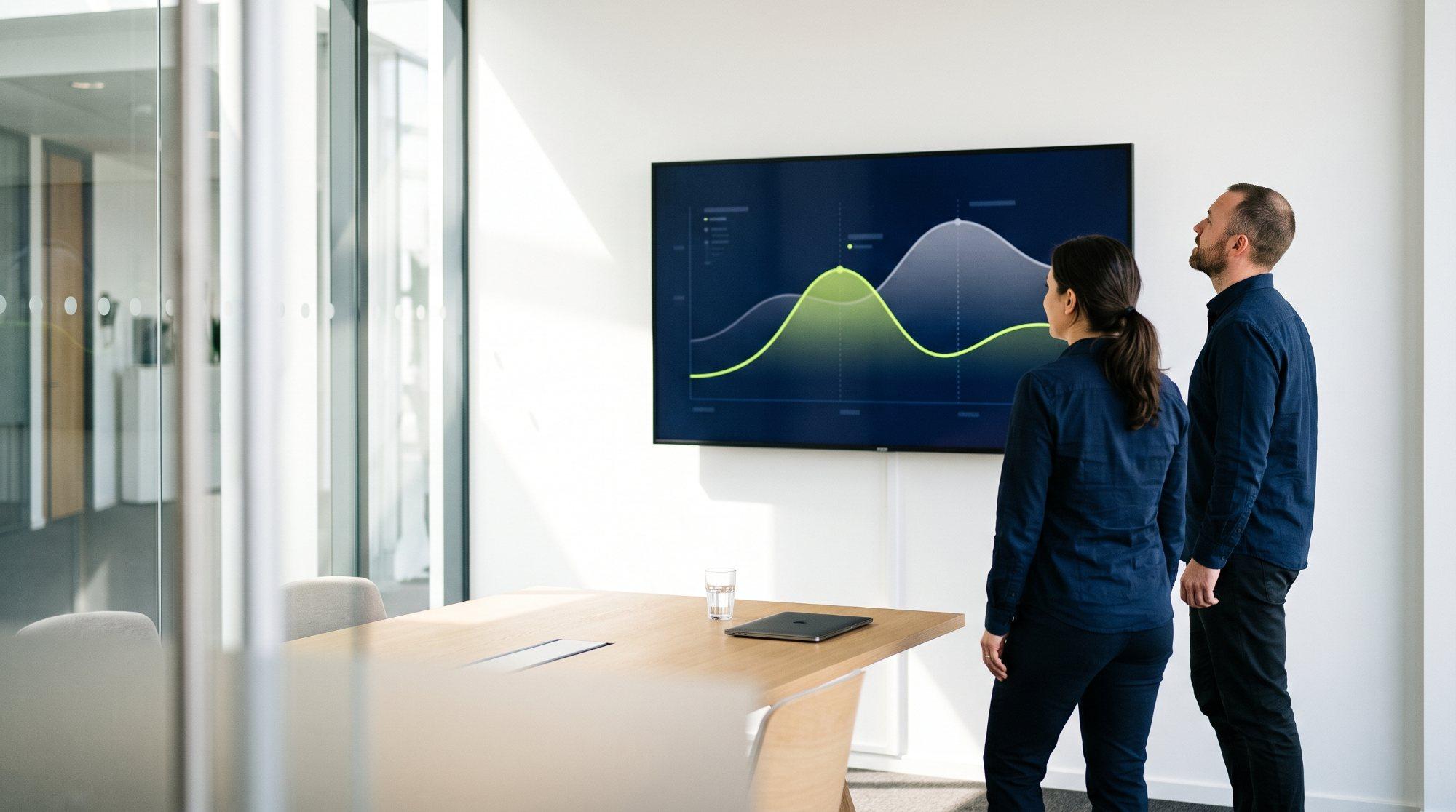 das.os.analytics
evaluates
in retrospect
What orchestration does in operation, analytics makes traceable afterwards – for any period.
Every intercepted peak load is counted and attributed to the intervention that prevented it.
The difference between uncontrolled and controlled peak load is reported in kilowatts.
The amount that das.os shows in euros results from the reduced peak load and the stored tariff. Billing happens in das.care.
das.os.connect connects meters, systems and third-party systems. Only this connection makes measuring, controlling and optimising possible.
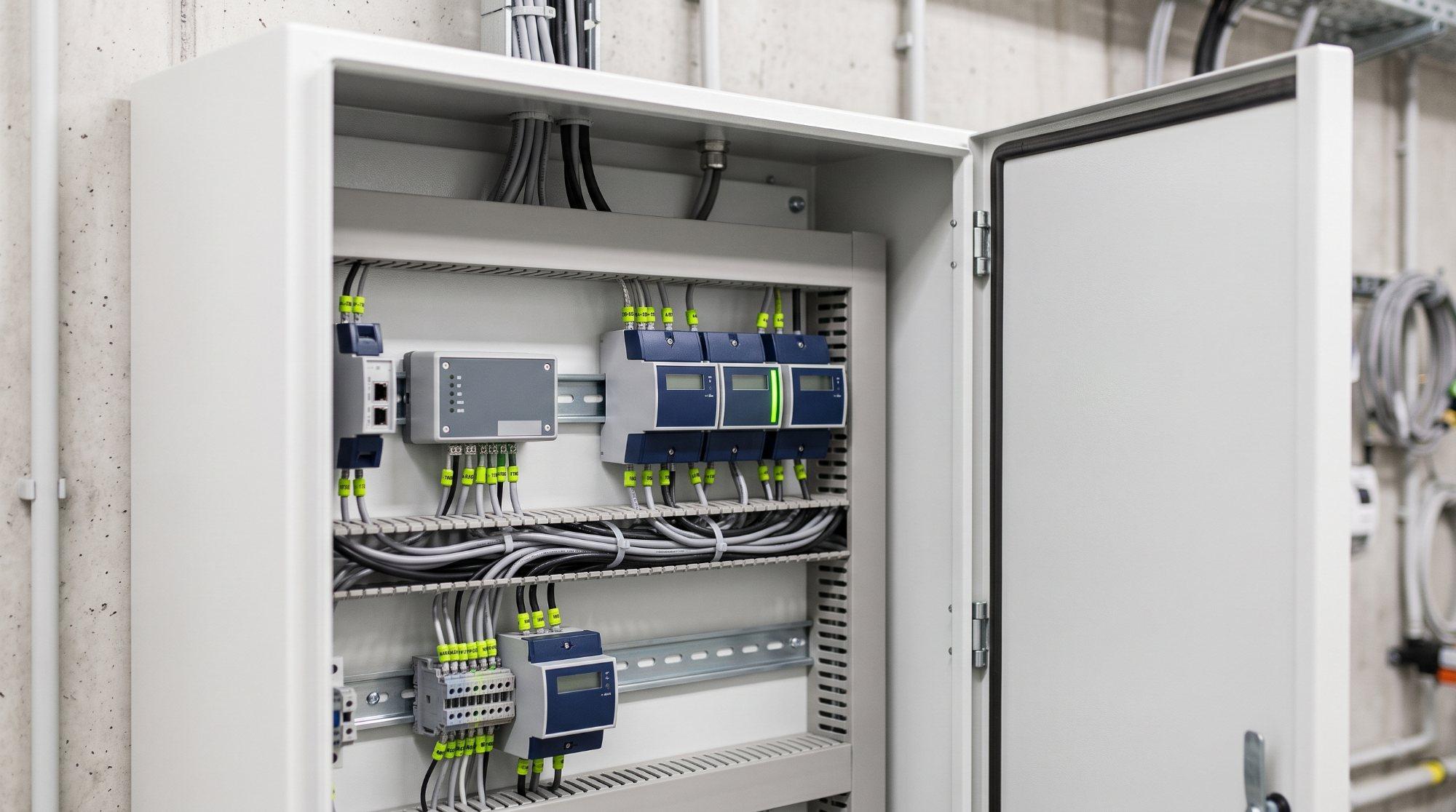 das.os.connect
Connection of existing plants and third-party systems in the building.
Readings as the basis for monitoring and analytics – and for billing in das.care.
Storage, inverters, charging points and consumers become addressable.
Open programming interfaces for data exchange in both directions.
Tell us about your building and existing systems – you will receive an assessment of which functions make sense and what can be controlled with them.
The operating system for energy from das.kraftwerk. It has three tasks: control with das.os.orchestration and six functions, measure with das.os.connect and das.os.monitoring, optimise with das.os.analytics.
Orchestration acts and optimises – this is where peak shaving actually happens, by controlling storage, charging infrastructure or consumers. Monitoring shows what is happening: current load, grid supply, storage output, peak values and messages like “Peak shaving active”.
In orchestration. das.os detects an imminent load peak and counteracts it. Monitoring shows the process in real time, analytics evaluates it afterwards and shows the savings in euros.
Peak shaving, self-consumption optimisation, storage control, PV surplus, charging optimisation and dynamic grid supply.
Analytics answers three questions in retrospect: How many peaks were avoided? How many kW of peak load were reduced? How many euros were saved? Plus performance data, forecasts and KPIs.
Billing happens only in das.care: tariffs, meter readings, cost centres and tenant electricity. das.os supplies the readings for it.
Via das.os.connect: interfaces to existing plants, smart meters, connected devices and open APIs.

Personal consultation
We'll show you das.os on your building.