Skip to content
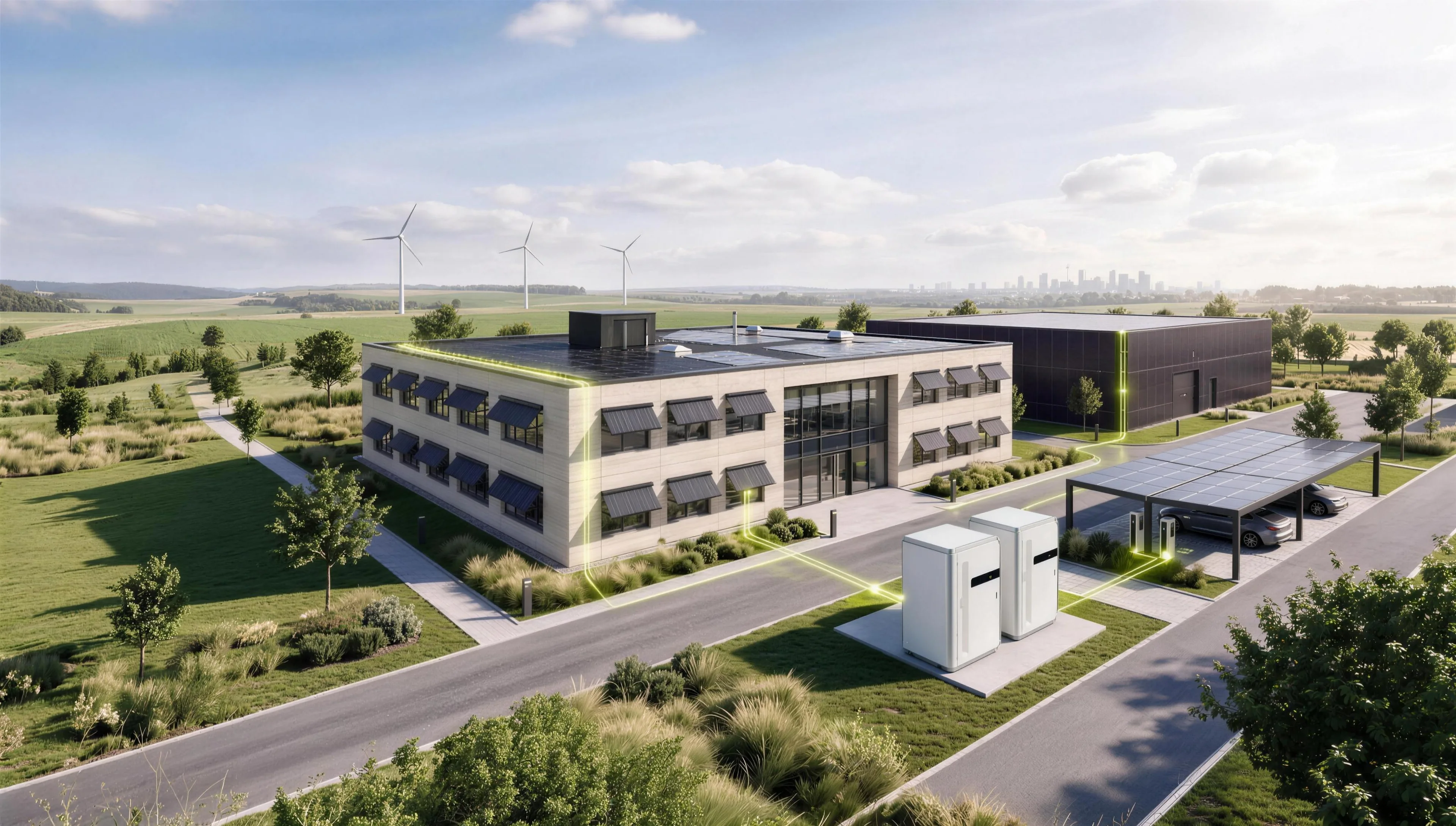
Commercial site with PV glass modules on the roof of the office building, PV carport and storage
das.coreEnergy components · Generate

More output from every square metre of roof.

Our PV glass modules get the highest yield from load-bearing roof and open areas: double glass, bifacial, with up to 660 Wp per module and 24.43% efficiency. Three cell technologies are available – we work out which one suits your area.

660Wpper module
24.43%Efficiency
244Wp/m²Output per area
The starting situation on the roof

The area is limited. The electricity demand is not.

Heat pumps, charging points and production need more and more electricity – the roof area doesn't grow with it. How much a roof delivers over decades is therefore decided by the individual module.

01
Limited areaSkylights, ventilation and edge distances take up space. What remains has to carry as much output as possible.
02
Partial shadingParapets, roof structures and neighbouring buildings cast shadows – and every shadow costs yield.
03
Heat in summerWith every degree of cell temperature, output falls – exactly when the sun is strongest.
04
AgeingEvery module loses output over the years. How much decides the yield in 20 and 30 years.
05
Visible roofsOn office and residential buildings, appearance also counts: busbars and light gaps stand out.
The turnaround

Contacts at the back. The whole front works.

With back-contact technology, all electrical contacts are on the back of the cell. At the front, no busbar shades the active area. This brings up to 5% more output per area than conventional modules – in a double-glass module built for 30 years of operation.

  • Up to 660 Wp per module at 24.43% efficiency
  • Over 70% less power loss with shading
  • At least 88.85% output after 30 years
Have your roof area checked
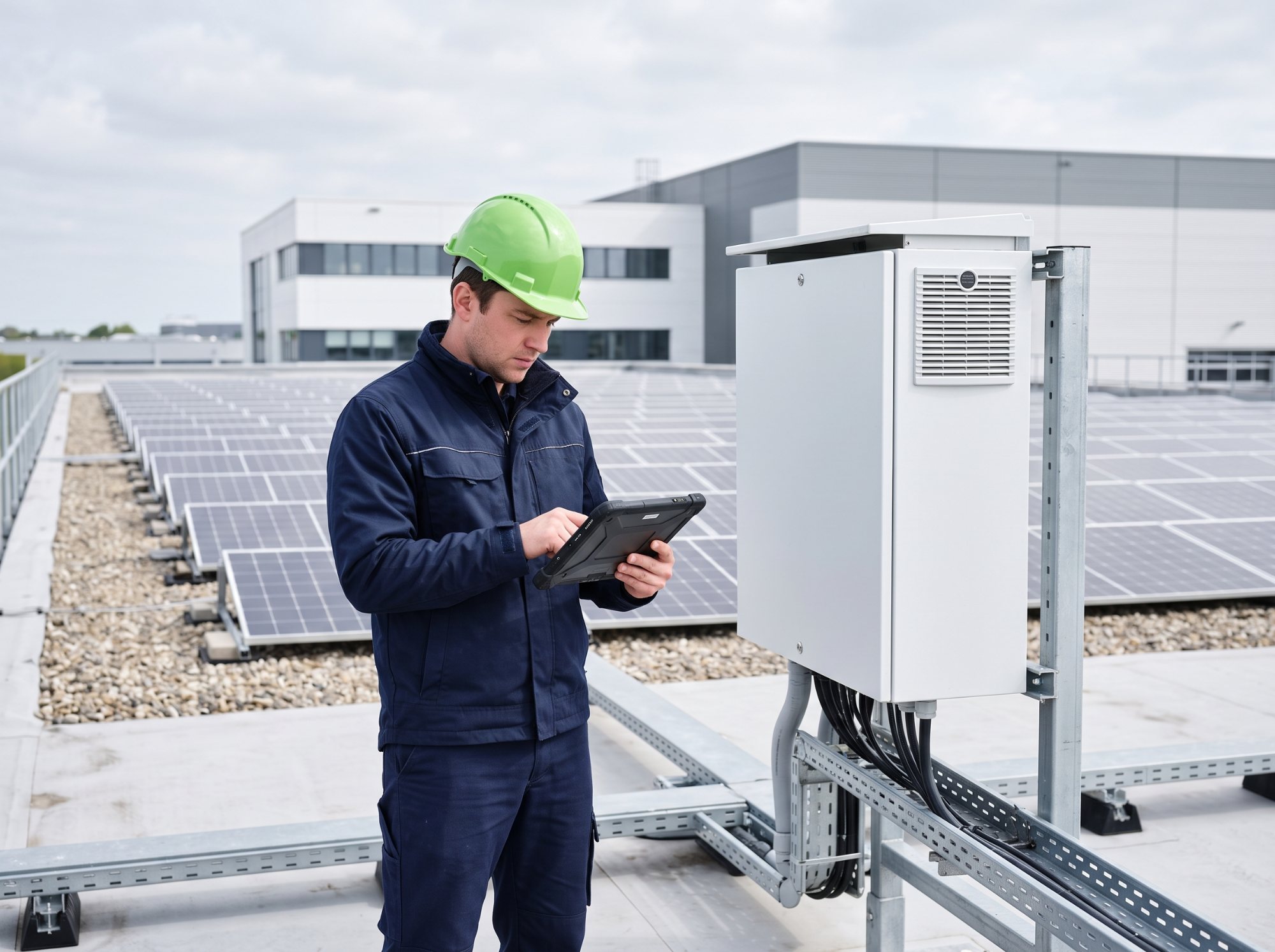
Technician checks a system with PV glass modules on a flat roof
PV Glass Modules · back contact
What sets the modules apart

More yield. Less loss. For decades.

The values apply to the back-contact version with 640 to 660 Wp. Which technology delivers the best yield on your area is clarified during design.

01
High power densityUp to 5% more output per area than conventional modules – approx. 244 Wp/m².
02
Strong in shadePower losses due to shading fall by over 70%. The hotspot-resistant design prevents fire risks.
03
Stable in heatTemperature coefficient of only −0.26% per °C – the module delivers even on hot days.
04
Double glass, bifacialGlass at the front and back protects the cells. The back also uses the light reflected by the ground.
05
DurableMaximum 1% degradation in the first year, then 0.35% per year.
Three cell technologies

Which technology suits your area?

All three are bifacial double-glass modules with N-type half-cells and a 30 mm aluminium frame. They differ in where their strengths lie.

Tight and visible roofs01

Back contact

All contacts are on the back of the cell. No busbars on the front, all-black cells, the highest power density and the best behaviour under shading.

  • Efficiency up to 24.43%
  • 640–660 Wp · Full Black 470–490 Wp
  • Temperature coefficient −0.26% / °C
Large roof and open areas02

TOPCon

An ultra-thin tunnel oxide layer with passivated contact reduces losses in the cell. The highest module output of the three – without light- and temperature-induced degradation (LID, LeTID).

  • Efficiency up to 23.53%
  • 710–730 Wp · bifaciality 80 ± 5%
  • Temperature coefficient −0.29% / °C
Hot locations, light-coloured surfaces03

Heterojunction (HJT)

Crystalline silicon combined with thin layers of amorphous silicon. The lowest temperature coefficient, high bifaciality and high output in low light.

  • Efficiency up to 23.21%
  • 700–720 Wp · bifaciality 80 ± 5%
  • Temperature coefficient −0.24% / °C
Technical data

Everything the planners want to know.

PV glass module with black cells, front and backBack contact 660
660Wp
Module output
24.43%
Efficiency
approx. 244Wp/m²
per area
Power classes
640 / 645 / 650 / 655 / 660 Wp
Module efficiency
23.69 – 24.43%
Cell technology
N-type back contact, 132 half-cells
Operating voltage Vmpp
41.18 V (660 Wp)
Operating current Impp
16.03 A (660 Wp)
Open-circuit voltage Voc
49.92 V (660 Wp)
Short-circuit current Isc
16.70 A (660 Wp)
Power tolerance
0 to +3 %
Max. system voltage
DC 1500 V (IEC)
Glass
Double glass 2.0 + 2.0 mm, heat-strengthened
Bifaciality
75 ± 5%
Frame
30 mm anodised aluminium
Junction box
IP68, 3 bypass diodes
Dimensions
2382 × 1134 × 30 mm
Weight
33.5 kg
Hail · wind · snow
Ø 25 mm at 23 m/s · 2400 Pa · 5400 Pa
Fire safety class
IEC class C
Operating temperature
−40 °C to +85 °C
Temperature coefficient Pmax
−0.26 % / °C
Part of das.energiesystem

The module generates – the system turns it into supply.

PV glass modules supply the electricity, the industrial storage buffers, charging infrastructure and building consume, das.os controls. Every component knows the others.

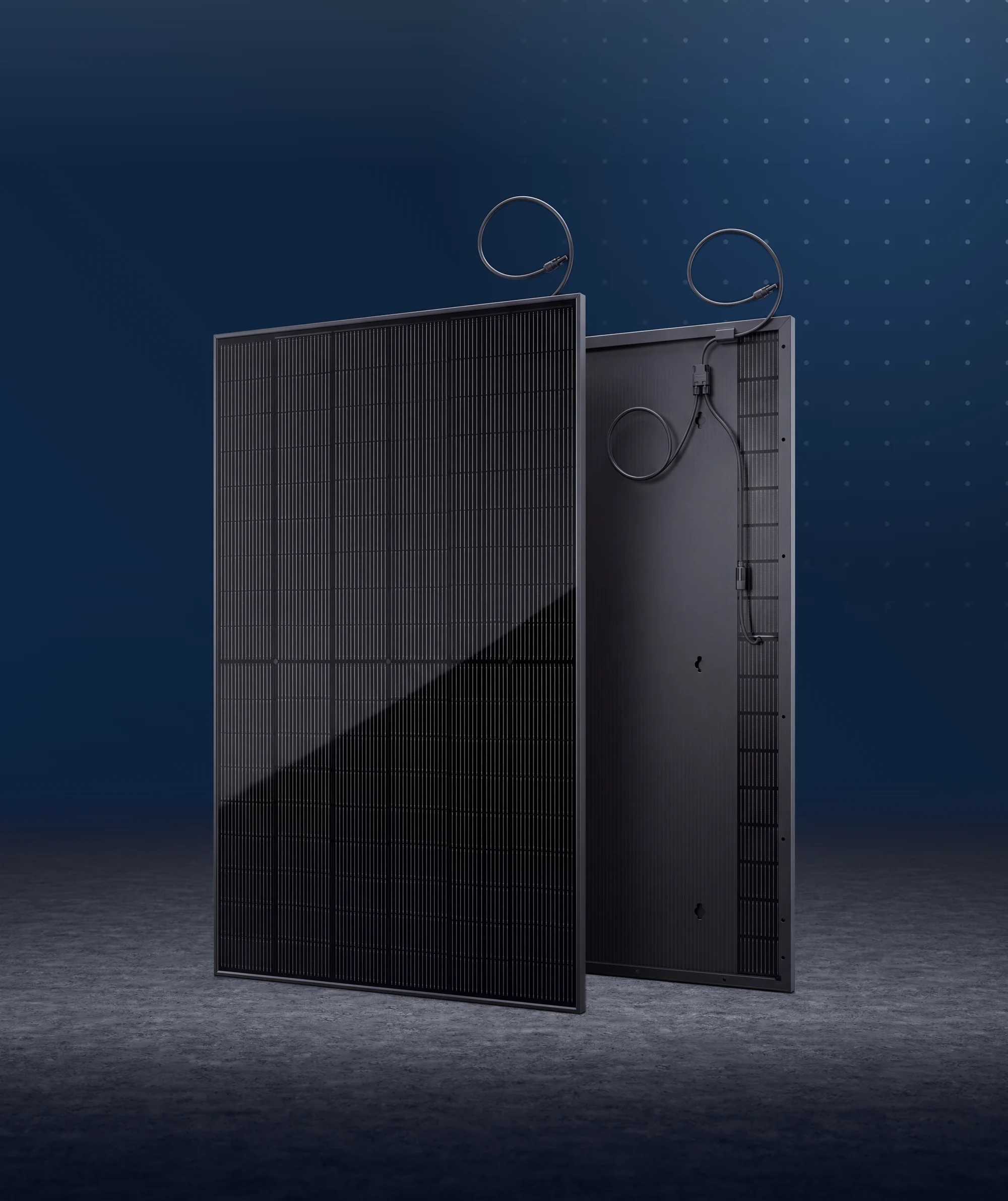
PV glass module, front and back
1Generate
PV Glass Modules

Up to 660 Wp per module – high output on load-bearing roof and open areas.

Industrial Storage
2Store
Industrial Storage

289 kWh / 125 kW – caps peaks, shifts generation, relieves the connection.

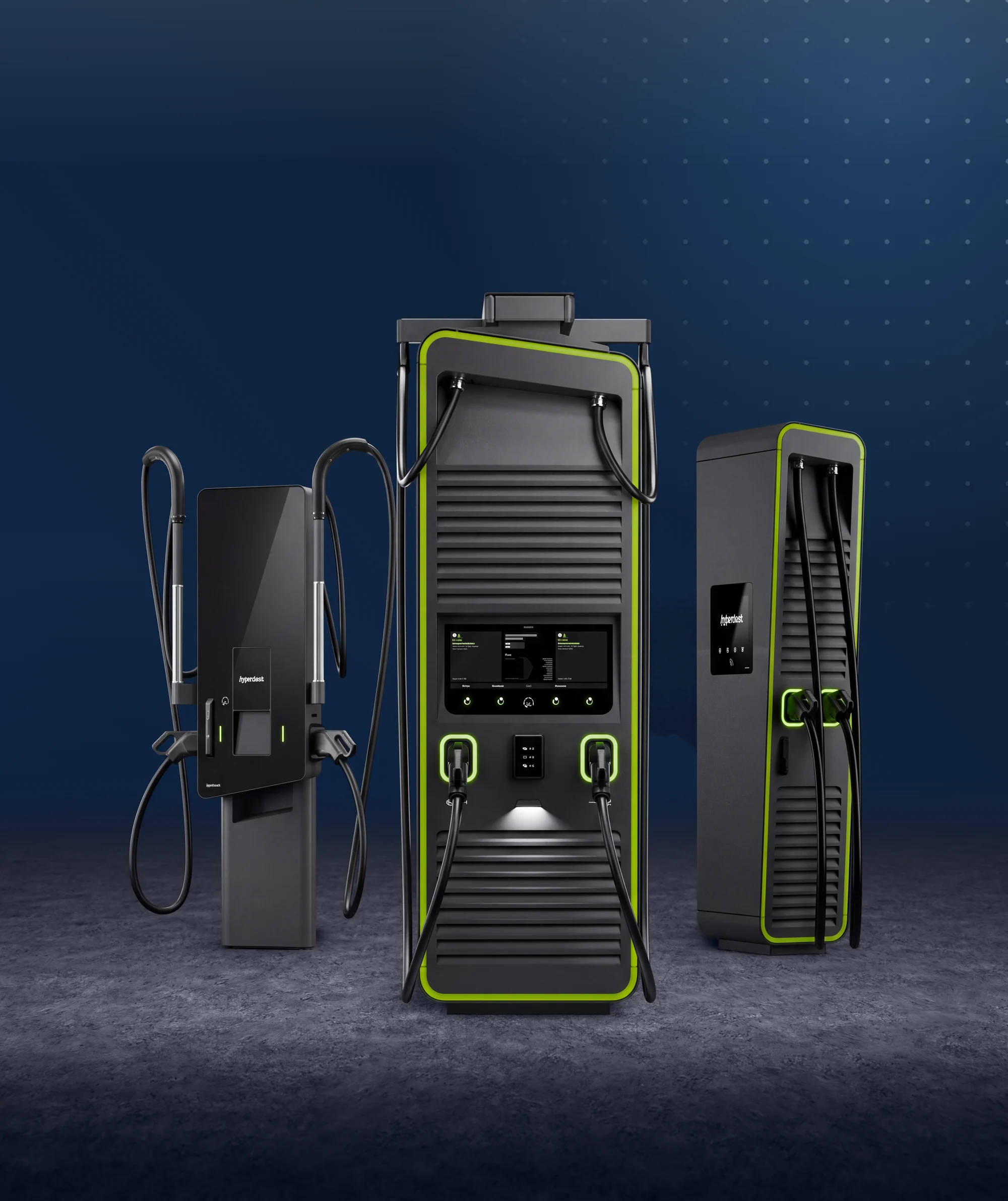
DC charging infrastructure
3Use
Charging Infrastructure

AC and DC charging points, integrated into the site's load management.

das.os monitoring
4Control
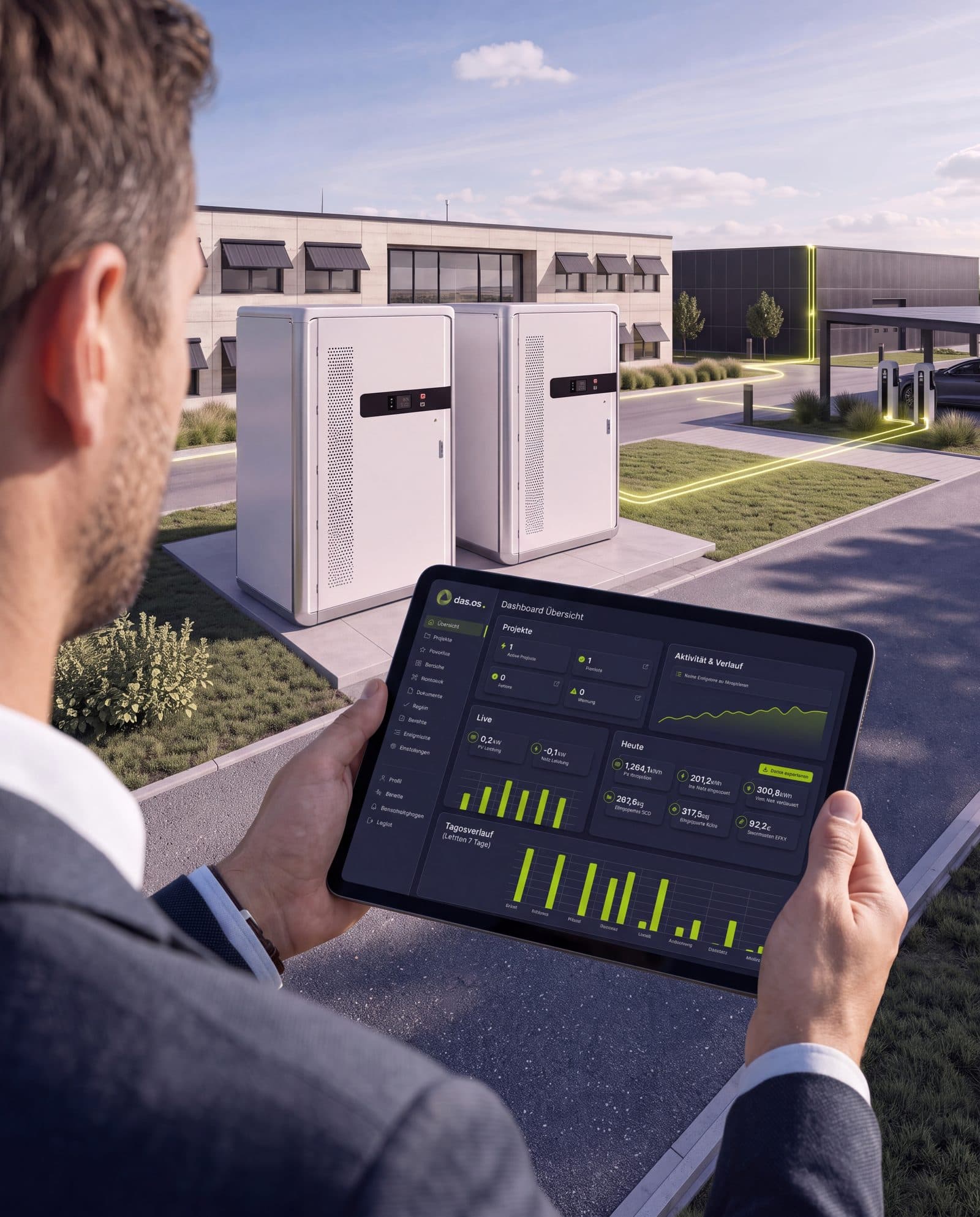
das.os

Orchestrates generation, storage and consumers – and makes everything measurable.

Non-binding area check

How much output fits on your area?

Send us area, roof type and location. We check structural capacity and shading, choose the right cell technology and tell you what output your area can take.

Step 01 · Area1 / 3
01

Which area is it about?

Area type, size and location are enough for an initial design.

Frequently asked questions

What you should know about PV glass modules.

A framed solar module in which the cells lie between two panes of glass (double glass). The glass protects the cells on both sides, a 30 mm frame of anodised aluminium carries the module. It is mounted on a substructure.

Contact

Personal consultation

+43 2622 35001office@daskraftwerk.biz
PV Glass Modules

We check structural capacity, shading and orientation, choose the right cell technology and support installation, connection and operation.